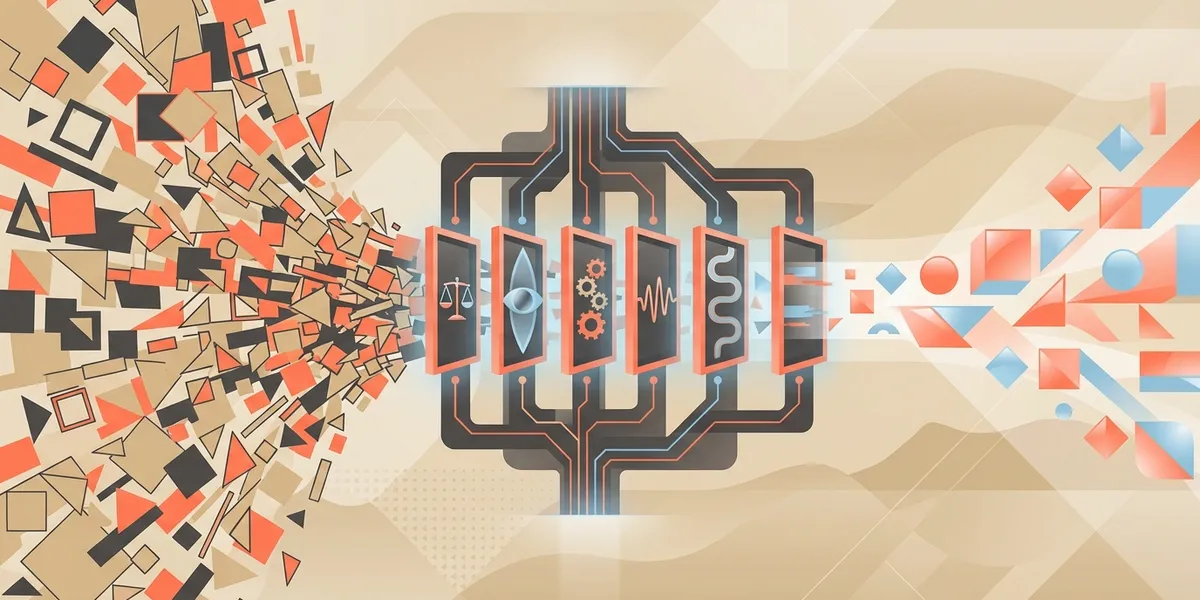
AI can generate 100 ads. That's the problem.
AI has made one thing absurdly easy: making more creative. You can generate 30 hooks, 50 headlines, 12 thumbnails, 8 UGC scripts, and a suspiciously confident voiceover—all before your coffee finishes negotiating with gravity.
And then the dashboard shows you a brutal truth: you didn’t need more ads. You needed more winners.
TL;DR
AI makes it trivially easy to produce 100 ad variants. The bottleneck has shifted from production to quality control—knowing which ads will build trust vs. which will weird people out. Use a preflight checklist before you spend. Check for clarity, credibility, brand consistency, and the new one: “AI tells” that trigger instant distrust.
Run every piece of creative through six questions before it leaves the building.
What is Creative Preflight QA?
Creative Preflight QA is the quality control process that performance marketing teams run on AI-generated ads before launch. It’s a systematic checklist—similar to aviation preflight checks—that catches clarity issues, credibility problems, brand drift, and “AI tells” that trigger audience distrust. The goal: prevent spending budget on ads that confuse, mislead, or creep out your audience.
The bottleneck is “quality at speed”
When we started talking to performance marketing teams, we kept hearing the same thing: AI had solved their production problem but created a new one. They could generate infinite variants, which meant they could also generate infinite ways to confuse the audience, weaken trust, drift off-brand, make claims they can’t defend, or accidentally create “uncanny valley” content that makes people scroll away on instinct.
Teams we talked to started calling this “Creative Preflight QA”—the checklist you run before spending. It’s the same idea as a preflight checklist in aviation—or if you prefer sci-fi, the “shields up, red alert” sequence before the Enterprise goes into battle. You don’t skip the checklist just because you’re excited about the mission. Most crashes happen not because someone didn’t invent a better plane, but because someone skipped a basic check.
The Creative Preflight Checklist (short, brutal, useful)
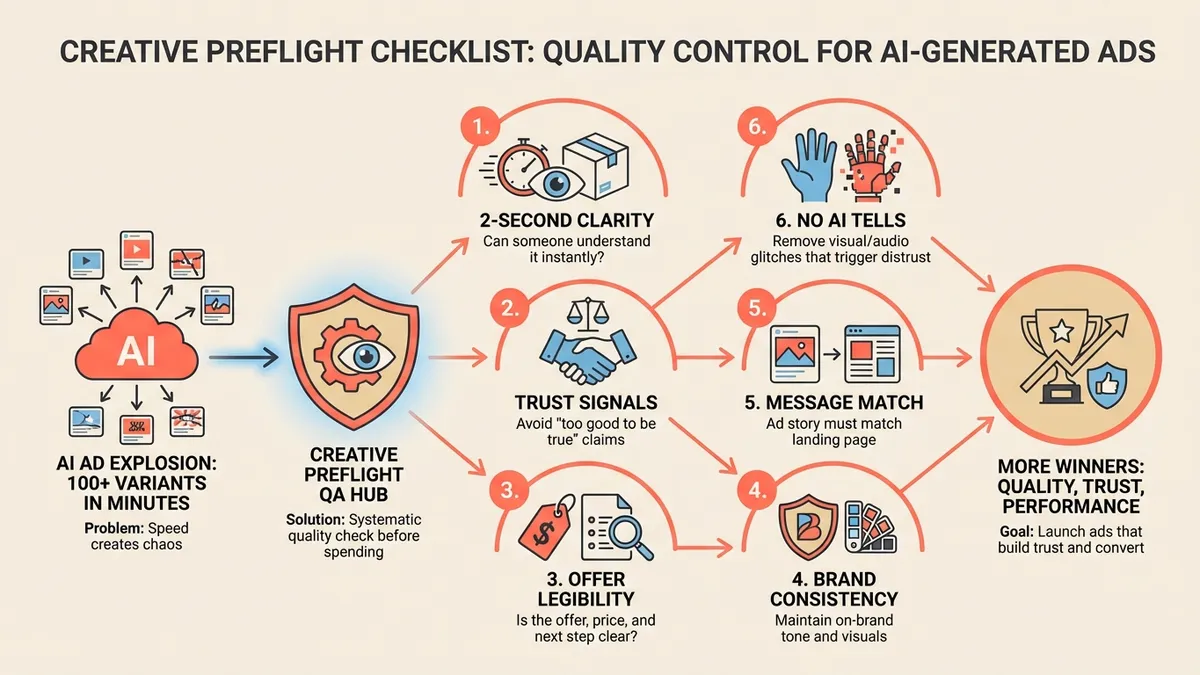
We synthesized what we heard from creative directors and performance marketers into six questions. This isn’t our invention—it’s what the best teams we talked to were already doing intuitively. Use this before you spend.
1) Can someone tell what this is in 2 seconds?
What’s being sold? Who is it for? What outcome do they get? If any of those answers require a paragraph, the ad is doing interpretation work the audience won’t do.
2) Does anything feel “too good to be true”?
Trust dies quietly. Look for vague superlatives (“best ever”, “revolutionary”), claims without anchors (numbers, mechanisms, constraints), and overly glossy visuals that signal “this is an ad,” not “this is real.” One creative lead told us: “If it sounds like a press release, it’s already dead.”
3) Is the offer legible?
People can’t buy what they can’t parse. Answer these clearly: how much? What do I get? What’s the guarantee or risk reversal? What’s the next step? We’ve seen ads that buried the price three clicks deep—and then wondered why conversions were low.
4) Is it on-brand (or just “trending”)?
Trends are fun until your brand voice becomes a haunted house of borrowed personalities. Creative directors described what happens when a B2B SaaS company tries to “do TikTok voice”—it’s like watching your parents try to use slang. Painful for everyone involved. Check your tone (warm vs edgy vs premium vs playful), vocabulary (do you sound like your customers?), and visual identity (colors, type, “vibe” consistency).
5) Is the landing page the same story?
Performance marketers told us message match was more critical than they’d initially expected. If the ad promises one thing and the landing page starts talking about another thing, the audience doesn’t feel “informed”—they feel tricked. This is table stakes, but message drift is surprisingly common.
6) Are there “AI tells” that trigger instant distrust?
This is the new one. “AI tells” are visual or audio artifacts that signal AI-generated content—the subtle (or not-so-subtle) glitches that make audiences scroll away on instinct. Look for weird hands/faces, warped text, unnatural motion, audio that feels emotionally wrong for the words, and background details that don’t obey reality. You don’t need perfection—you need “not creepy.” When we run ads through Chorus, this is one of the most common failure modes we catch.
AI-Powered Ad Testing: From Checklist to Automated Preflight
The six-question checklist above works for manual review. But when you’re generating 50 variants a week, manual QA becomes a bottleneck. This is where AI-powered ad testing tools come in—software that automates the preflight process.
The landscape of creative pre-testing tools breaks down into a few categories:
| Tool Type | Examples | What It Does | Limitation |
|---|---|---|---|
| Predictive scoring | Kantar LINK AI, System1 | Predicts ad performance based on historical data | Quantitative only, no “why” |
| A/B testing platforms | Optimizely, VWO | Tests live variants against real users | Requires traffic, post-launch |
| Synthetic persona testing | Chorus, OpinioAI | AI personas evaluate before launch | Newer category |
| Manual QA | Internal review, agencies | Human judgment | Slow, doesn’t scale |
Why synthetic persona testing for AI-generated content?
Traditional AI ad testing tools like Kantar were built for a world where creative production was slow and expensive. You’d produce 2-3 hero concepts, test them rigorously, and launch the winner.
AI-generated content flips this model. You produce 50 variants in a day. You can’t afford to test each one through traditional methods. But you also can’t afford to launch untested creative—especially when AI introduces new failure modes (the “AI tells” problem).
Synthetic persona testing fills this gap: fast enough for high-volume workflows, qualitative enough to catch trust and clarity issues, cheap enough to run on every variant. (See our glossary for how these industry terms compare.)
Where Chorus fits
Chorus is built to run this preflight at scale. You upload creative (ad + copy + landing page), choose the Virtual Voices to test with, and get back a red/yellow/green summary, risk flags with evidence, persona-based reactions, and a ranked fix list.
The point isn’t to slow you down. It’s to keep you from moving fast in the wrong direction—like the Enterprise’s computer flagging an anomaly before you warp into it.
The meta lesson: speed needs guardrails
“Move fast” is easy. “Move fast without breaking trust” is the actual skill. AI gives you speed. Chorus helps you keep quality, clarity, and credibility while you use it.
This is the part of AI we’re genuinely excited about: not just “make more stuff” but “make better stuff, faster, with fewer embarrassing mistakes.” The preflight checklist is boring right up until it saves you from shipping something that makes your brand look like it was assembled by a committee of competing algorithms.
Want to see how AI focus groups can catch issues before your audience does? Book a demo or explore our research.